What Sets Our Educational Translation Services Apart
- Certified Translators in All 11 South African Languages: Our first-language translators specialise in educational terminology and understand the cultural nuances that make classroom materials effective for young learners.
- Quality Assured, Accurate Translations: We employ rigorous MS Word spelling checks and additional final proofing to ensure your teaching materials are error-free. We are happy to demonstrate.
- Subject-Specific Knowledge for the Foundation Phase: We understand the intricacies of foundational subjects including Life Skills, Mathematics and Coding & Robotics, ensuring accurate and age-appropriate translations.
- Accessibility: We create clear, understandable translations for learners of all levels and backgrounds, promoting inclusivity in the classroom.
- Dedicated Collaboration: We work closely with schools, educational publishers and NGOs to deliver tailored solutions. Through years of feedback from educators and publishers, our translators know the right register and tone for your readership.
Life Skills Translation Services for the Foundation Phase
We provide certified translation services for Life Skills curriculum and resources tailored for Grade R-3 learners across all 11 official South African languages. Our first-language translators handle everything from teacher guides and workbooks to interactive learning materials and parent communication documents.
We ensure that young learners receive culturally sensitive and age-appropriate translations of essential life skills materials, covering topics like personal well-being, creative arts and first knowledge of the world around them. This careful approach supports healthy development and deeper understanding in their home language. Our accurate translations help educators convey important concepts while maintaining the original educational intent, promoting inclusivity, engagement and participation in the early learning environment.

Mathematics Translation Services for the Foundation Phase
For foundational mathematical learning in South Africa, iiTranslation delivers certified translation services for Grade R-3 curriculum materials. We specialise in translating essential mathematical terminology into all 11 official South African languages, ensuring accurate and culturally relevant translations. This includes basic arithmetic concepts, interactive worksheets and classroom games. Our focus is on clear and precise translations that feel natural to young learners in their home language, building confidence and a solid mathematical foundation for logical thinking.
Coding & Robotics Translation Services for the Foundation Phase
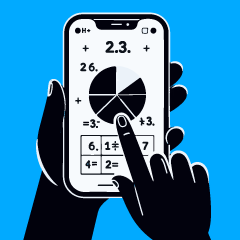
As conceptual coding and logical step-based learning gain increasing importance in early education, iiTranslation provides certified translation services for Grade R-3 coding and robotics learning materials in all of South Africa's official languages. We translate teacher guides, learner workbooks and digital learning platforms, ensuring young South African learners can access these vital STEM skills in their home language. Our accurate translations ensure educators can effectively and inclusively introduce coding and robotics concepts within the Foundation Phase curriculum.
Request a Certified Educational Translation Quote
Our certified, first-language translators deliver precise CAPS-aligned translations for Foundation Phase schools, educational publishers and NGOs across all 11 official South African languages. Email us at: info@iitranslation.com and attach your materials for a personalised quote within five minutes (7:30am - 5pm SAST, Monday to Friday). Include your region or district and we will advise on the most appropriate languages for your schools.
Frequently Asked Questions: Educational Translation Services
What educational documents do you translate?
Our educational translation work spans two distinct markets. For the Foundation Phase (Grades R to 3), we translate the full range of CAPS-aligned curriculum materials: teacher guides, learner workbooks, interactive classroom activities, assessment instruments and parent communication documents. Our Foundation Phase specialisation covers Life Skills, Mathematics and Coding and Robotics across all 11 official South African languages. For the university and research market, we translate academic research papers, study materials, informed consent forms for educational research, institutional communications and postgraduate theses. We also work with educational publishers and NGOs on large-scale curriculum projects requiring consistent terminology and register across multiple language versions of the same material.
What does CAPS alignment mean for translation and why does it matter?
The Curriculum and Assessment Policy Statement (CAPS) is the Department of Basic Education's standardised framework for what is taught and how it is assessed in South African schools. For a translation to be CAPS-aligned it must do more than convert words accurately. It must use the specific terminology, sequencing and assessment language that CAPS prescribes for each subject and grade. A teacher using a translated workbook needs to find the same concepts described in the same way that their training used and that other materials in the classroom use. If a translated Life Skills workbook uses a different term for a CAPS concept than the teacher's guide does, the classroom experience breaks down. Our translators have subject-specific knowledge of the Foundation Phase curriculum and understand the terminological conventions established across the CAPS documents in each language. This is not knowledge that can be acquired from a glossary. It comes from years of working within the educational publishing sector.
How do you translate Coding and Robotics into South African languages?
Coding and Robotics is one of the most interesting translation challenges in the current South African curriculum. The subject was introduced relatively recently and much of its technical vocabulary has no established equivalent in most indigenous South African languages. Terms like "algorithm", "decomposition", "debugging" and "sequencing" exist in English and have been adopted into many global languages, but their translation into isiZulu, Sepedi, Setswana and other official languages is still being developed and standardised. Our approach is to work from the CAPS definitions of each concept rather than the English term alone, producing translations that describe what the concept means to a Grade R or Grade 1 learner rather than simply transliterating a technical word. We document every terminological decision in a project glossary so that all language versions of the same material use consistent, deliberate terminology. For publishers producing Coding and Robotics materials across multiple languages, this terminological framework becomes a long-term asset that carries across future editions.
How do you ensure educational translations are appropriate for young learners?
Foundation Phase translation requires a register that is substantially different from the language used in legal, medical or corporate documents. The text must be understood by a six-year-old hearing it read aloud, by a teacher explaining it to a classroom and by a parent reading a letter about their child's progress. These are three different registers and a translator working on Foundation Phase materials needs to hold all three simultaneously. Our Foundation Phase translators have specific experience in the educational publishing sector and understand the vocabulary, sentence length, rhythm and cultural references that work for young learners in each language community. Age-appropriateness in isiXhosa or Sepedi is not simply a scaled-down version of adult language. It draws on storytelling traditions, familiar community references and the specific ways children in those communities are spoken to at home and in early childhood settings. This cultural grounding is what separates a translation that children engage with from one that is technically accurate but feels alien in the classroom.
Which languages do you translate educational materials into?
We translate Foundation Phase curriculum materials into all 11 official South African languages: isiZulu, isiXhosa, Afrikaans, Sepedi, Setswana, Sesotho, Xitsonga, Siswati, Tshivenḓa and Southern isiNdebele alongside English. For multi-language publishing projects, we manage all language versions concurrently using a shared terminology framework, ensuring consistency across the full set. We can advise on language prioritisation by school district or province if you are working within a budget that does not cover all 11 languages simultaneously.
Do you work with educational publishers and NGOs as well as schools?
Yes, and the majority of our educational translation work comes from publishers and NGOs rather than individual schools. Educational publishers producing CAPS-aligned textbooks and workbooks for national distribution require translation at scale, with strict consistency across language versions and tight production deadlines. We have experience working within publishing workflows, delivering files in the formats that design and typesetting teams require and flagging layout issues caused by text expansion or contraction between languages before they become production problems. NGOs working in early childhood development, literacy programmes and community education typically require a different approach: materials need to work in low-resource environments, with mixed literacy audiences and across community contexts that published textbooks may not reflect. We adapt our approach to the distribution context of each project.
Do you translate university and academic research materials?
Yes. Alongside our Foundation Phase work we translate for universities, research institutions and postgraduate students. This includes research papers for publication, postgraduate theses, informed consent forms for educational studies, participant information leaflets, survey instruments and institutional communications in the official South African languages required by research ethics committees. Academic translation requires a different discipline from curriculum translation: the register is formal, the terminology is field-specific and the source text is often written in complex English that must be rendered accurately without sacrificing accessibility for research participants. Our academic translators hold postgraduate qualifications and have experience working with South African and international research institutions.
Can AI be used to translate educational materials into South African languages?
Not to a standard that would be acceptable in a classroom. The data scarcity problem that affects AI translation across all South African Bantu languages is particularly damaging in educational contexts because the errors that result are invisible to the teachers and learners who encounter them. A teacher using an AI-translated workbook has no way of knowing that a mathematical concept has been described using a term that no other material in the classroom uses, or that a Life Skills activity has been rendered in a register that sounds unnatural to the children it was written for. These are not dramatic errors that jump off the page. They are the quiet failures of a text that was never written by someone who knows how a child in that community speaks and learns. Beyond the quality problem, AI output in Coding and Robotics is essentially unusable because the subject's terminology in indigenous South African languages does not exist in any training data in sufficient volume for models to have learned it. The result is transliterated English dressed up as isiZulu or Sepedi. For materials that will be used in classrooms and that carry the authority of a published curriculum resource, only a qualified human translator with subject-matter expertise produces output that is fit for purpose. Compare South African language availability for AI training on our dedicated FAQ page.
How long does an educational translation take and what does it cost?
We use transparent per-word pricing for all educational projects and the figure in your quote is the final amount, with no administration fees or surcharges. Educational content is priced at specialist rates reflecting the subject-matter expertise required, but we never charge premium fees for faster turnarounds. Our minimum project cost is R500 + VAT. For large-scale publishing projects involving multiple languages and high word counts, we provide a detailed project plan with milestones and delivery dates before work begins. For smaller once-off projects, most clients receive a quote within 5 minutes of emailing their materials during business hours. If you are working across multiple languages, please include the full language list and any production deadlines when you write so we can confirm availability and sequence the work appropriately.
Clients