Building Transparency & Trust with SLP Translations
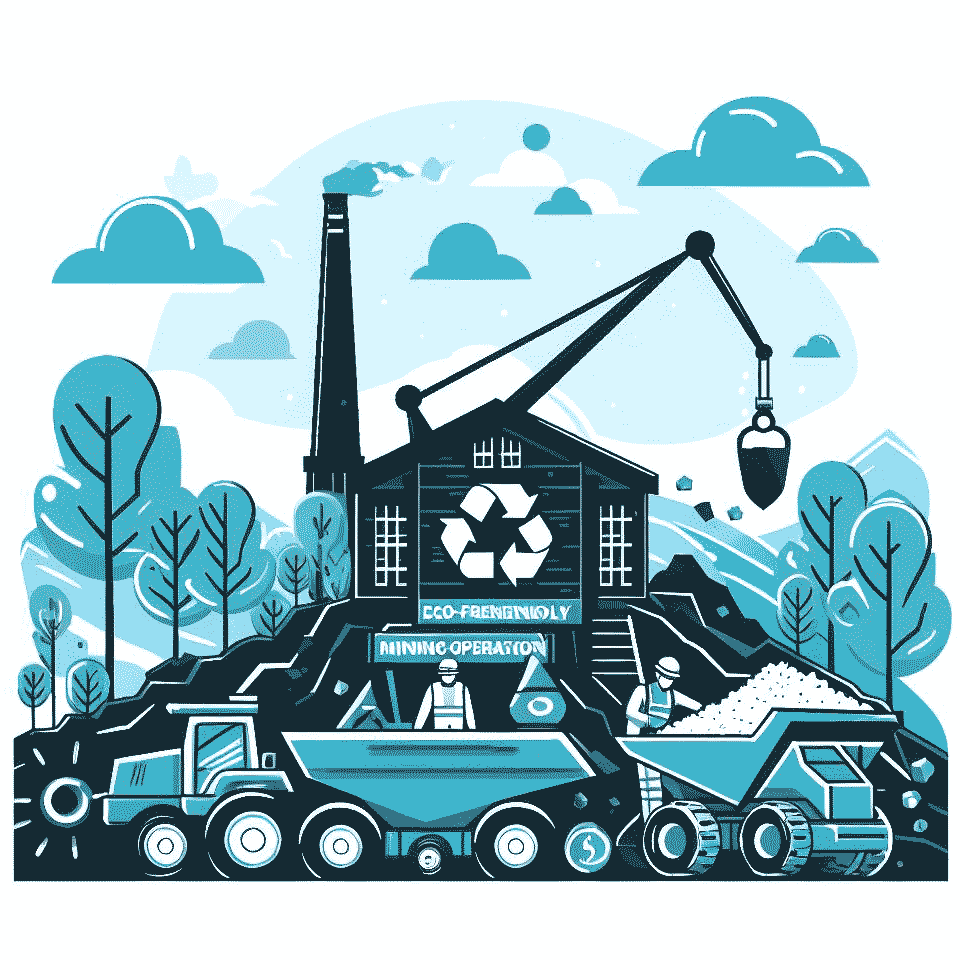
Accurate, culturally sensitive translations of Social Labour Plans (SLPs) are essential for building a mining sector that benefits everyone. We facilitate clear communication between mining entities and local communities, ensuring informed participation in every step of the process. Here's how our SLP translation services can help you:
Ensure Transparency
We break down the complex legal and technical jargon in SLPs into clear, understandable explanations for community members. We use plain language and culturally appropriate terminology to ensure everyone grasps the document's key points without difficulty. We also provide glossaries and terminology guides to reinforce understanding of crucial terms and concepts.
Build Trust
Our focus on accurate and reliable translations builds trust between mining operators and local communities. Clear communication encourages open dialogue and collaborative decision-making, allowing everyone involved to be fully informed and to feel heard. We carefully interpret community feedback and concerns, ensuring they are understood and addressed with transparency.
Empower Communities
We create an inclusive environment where everyone can actively engage with SLPs by asking questions and making informed decisions. This allows communities to hold mining entities accountable for their commitments and to advocate effectively for their best interests. We also offer training and capacity-building programmes to enhance community members' understanding of mining processes and their rights, strengthening their ability to participate meaningfully.
Navigate Complexities
With extensive experience navigating the nuances of SLP terminology and local cultural contexts, we ensure accurate and constructive communication throughout. Our team of qualified and experienced translators are not only specialists in mining terminology, they also have a deep understanding of the social and cultural dynamics of South African communities. This ensures communication that is sensitive to cultural context, ensuring genuine mutual understanding across linguistic and cultural differences.
The Benefits of Accurate SLP Translations
- Reduce misunderstandings and disputes: Clear communication prevents conflict and builds long-term positive relationships between communities and mining entities.
- Increase community buy-in: When communities understand the benefits and potential impacts of mining projects, they are more likely to participate and contribute to their success.
- Ensure compliance and social responsibility: Accurate translations ensure adherence to legal and ethical standards, protecting both communities and mining entities.
- Build a sustainable future: Transparent and inclusive communication lays the foundation for a mining sector that benefits everyone, both now and in the future.
| Acronym | English | IsiZulu | IsiXhosa | Sepedi | Setswana | Sesotho |
|---|---|---|---|---|---|---|
| AET | Adult Education and Training | IMfundo Nokuqeqeshwa Kwabantu Abadala | IMfundo yabaDala noQeqesho | Tlhahlo ya Batho ba Bagolo | Thuto le Katiso ya Bagolo | Thuto le Thupello ya Batho ba Baholo |
| LED | Local Economic Development | Ukuthuthukiswa Komnotho Wasendaweni | UPhuhliso lwezoQoqosho lwasekuhlaleni | Tlhabollo ya Ekonomi ya Tikologo | Tlhabololo ya Ikonomi ya Selegae | Ntshetsopele ya Moruo wa Lehae |
| MQA | Mining Qualifications Authority | UPhiko Lweziqu Zokuvukuza | UGunyaziwe weziQinisekiso zezeMigodi | Bolaodi bja Mangwalo a Thuto ya Tša Meepo | Bothati jwa Borutegi jwa Moepo | Bolaodi ba ba Mangolo a Thuto ba Merafo |
| SLP | Social Labour Plan | UHlelo Lwezomphakathi Nezemisebenzi | IsiCwangciso sezeNtlalo nezabaSebenzi | Leano la Leago le Mešomo | Leano la Loago le Tiro | Moralo wa Setjhaba le Mesebetsi |
Get a Certified Mining Translation Quote
Our certified translators deliver precise SLP, safety and community engagement translations for South Africa's mining sector in all 11 official languages. Email us at info@iitranslation.com and attach your documents for a personalised quote within five minutes (7:30am - 5pm SAST, Monday to Friday). Include your site location and we will advise on the most appropriate languages for your region.
Frequently Asked Questions: Mining Translation Services
What is a Social Labour Plan and why does it need to be translated?
A Social and Labour Plan (SLP) is a legal document that every mining company operating under a new order mining right in South Africa is required to submit to the Department of Mineral Resources and Energy (DMRE) under the Mineral and Petroleum Resources Development Act (MPRDA). The SLP sets out the mining company's commitments to local economic development (LED), human resources development, mine community development and housing and living conditions for affected workers and communities. Translation is required for two distinct reasons. First, the DMRE requires that SLPs be accessible to the communities they affect, and those communities overwhelmingly speak languages other than English. Second, and more importantly, an SLP that a community cannot read is a commitment that a community cannot hold a mining company to. Accurate translation into the home languages of affected communities is therefore not just a regulatory obligation. It is the foundation of the trust and accountability that determines whether a mining operation maintains its social licence to operate.
Which languages do you translate SLPs and mining documents into?
The languages required for each project depend on the location of the mine and the communities it affects. South Africa's major mining regions each have a distinct language profile. In Limpopo, the primary language for community communication is Sepedi, which is the dominant home language across the province. In the North West, particularly across the Rustenburg and Marikana platinum belt, Setswana is the primary community language. In the Free State Goldfields, including operations around Welkom, Sesotho is most widely spoken. Mpumalanga operations require Siswati and Xitsonga depending on the specific community. KwaZulu-Natal operations primarily require isiZulu. We cover all 11 official South African languages and can advise on the correct language combination for your operation's host and labour-sending communities. Please include your site location when you request a quote.
What mining documents do you translate beyond the SLP itself?
The SLP is the most frequently requested document, but mining companies require translation across a wide range of operational and compliance materials. We translate SLP addenda and progress reports submitted to the DMRE, community engagement notices and public participation documents, LED project communications, Adult Education and Training (AET) materials, Mining Qualifications Authority (MQA) documentation, Standard Operating Procedures (SOPs) for site safety, mine community development reports and housing and living conditions documentation. We also translate the workforce safety communications that must be understood by every employee operating in a hazardous environment, where a translation error is not a compliance risk but a physical one. For each document type we apply terminology consistent with the standards established in the SLP itself, so that every community-facing communication from your operation speaks in a consistent, recognisable voice.
Does the DMRE have specific requirements for SLP translations?
Yes. The MPRDA and its accompanying regulations require that SLPs be made available to affected communities in a language they understand. In practice this means that compliant SLP translation must be produced by a first-language speaker of the target language with the academic and subject-matter qualifications to handle technical regulatory content, and the translation must be of a standard that communities can actually use. A document that is technically translated but inaccessible to a community with mixed literacy levels does not meet the spirit of the requirement. Our translations are produced by university-qualified first-language specialists with mining sector experience, passed through our ISO 17100:2015-compliant editorial process and delivered with a certificate of translation that can be included in your DMRE submission. We also produce plain-language summaries and glossaries where required, to support community understanding of the SLP's key commitments.
How do you ensure terminology is consistent across an SLP and all related documents?
Terminology consistency is critical in mining translation for the same reason it matters in legal and medical work: if the same concept is translated differently in the SLP, the progress report and the community notice, the community cannot verify whether commitments are being met. We build a dedicated terminology framework for each client at the start of the engagement, documenting the agreed translation for every key term across all target languages. This covers the SLP's specific LED commitments, the names of identified community projects, the titles of community and labour structures and all regulatory terminology. The framework is applied across every subsequent document we translate for that operation, updated when the SLP is amended and made available to the client for use in their own community communications. You can see examples of our standard mining sector terminology across five languages on our mining translation page.
Can AI be used to translate SLPs and mining safety documents?
No. Mining documents fail AI translation for the same reasons medical documents do, and the consequences are comparably serious. An SLP that communities cannot understand because of translation errors is a legal and reputational liability. A safety procedure that workers misunderstand because of a mistranslated instruction is a physical danger. AI translation tools produce unreliable output in all South African languages due to data scarcity, and mining terminology compounds this: the specific technical and regulatory vocabulary used in SLPs, DMRE submissions and MQA documentation does not exist in the training data that AI models have access to. The models hallucinate equivalents, borrow from related languages and fail on the grammatical structures that isiZulu, isiXhosa, Afrikaans, Sepedi, Setswana, Sesotho, Xitsonga and Siswati require. Using AI output as a draft for a human to correct is not a viable shortcut. A qualified mining translation specialist reviewing AI-generated Sepedi will find systematic errors that require full reconstruction. The work takes longer and costs more than translating directly from the source. For DMRE submissions and community-facing documentation, only a qualified human expert produces output that is defensible.
How do accurate SLP translations support community relations and social licence to operate?
A mining company's social licence to operate is not granted by a regulator. It is earned from the communities that live with the consequences of mining activity. An SLP that a community can read and understand is a fundamentally different instrument from one that only the mining company's legal team can navigate. When communities can read their own language in a document and verify that the LED commitments are what they were told they were, open dialogue becomes possible. When they cannot, suspicion fills the gap. Our translations are produced in the register and vocabulary that communities actually use, not in the formal written register of English legal documents rendered word-for-word. This distinction is what separates a translation that builds trust from one that technically satisfies a filing requirement while communicating nothing to the people it was written for.
How long does an SLP translation take and what does it cost?
We use transparent per-word pricing for all mining translation projects and the figure in your quote is the final amount, with no administration fees or surcharges. Mining and regulatory content attracts specialist rates reflecting the qualifications required, but we never charge premium fees for faster turnarounds. Our minimum project cost is R500 + VAT. SLPs vary considerably in length. A new SLP for a greenfield operation is a different scale of project from an addendum to an existing plan, so turnaround depends on document length, language combination and the availability of the specialist most appropriate for your content. We provide a firm deadline only after the assigned translator has reviewed your files. Most clients receive a quote within 5 minutes of emailing their document during business hours. Please include your site location and target languages so we can confirm the right language specialist immediately.
Clients